Nutritional Impact on mental health – What’s the connection between food and mental health? Basically, what we eat has a direct effect on our brain chemistry, which is what our brains need to be able to do their best. Let’s start by talking about the science that shows there’s a connection between what we eat and our mental health.
The Nutrition we are taking from food direct impact on mental health. A balanced diet that includes nutrients essential for brain function and support a healthy gut is vital for promoting positive mental well being. Conversely, a poor diet high poor diet high in processed foods and lacking essential for brain function.

According to World Health Organisation (WHO) (2019), mental disorders “are
generally characterized by some combination of abnormal thoughts, emotions, behaviour
and relationships with others.” These affect the quality of life of people and some might
appear in early adolescence. The determinants are not only individual capabilities of
coping with emotional challenges, but also social, political, environmental, working
conditions and community support. The WHO also confirms that stress, genetics,
nutrition, perinatal infections and exposure to environmental hazards are contributing
factors to mental disorders.
The Connection Between Food And Mood
The relationship between food and mood is indeed complex and multifaceted. The nutritional impact of the food we consume plays a crucial role in influencing our mental health and well-being in several ways.

Carbs And Mood – Carbohydrates are the primary source of energy for the brain. When you consume carbohydrates, they are broken down into glucose, which is used by the brain and other organs as fuel. Maintaining stable blood sugar levels is crucial for optimal brain function. Low blood sugar levels can lead to fatigue, irritability, difficulty concentrating, and mood swings. Conversely, consuming carbohydrates can help regulate blood sugar levels and improve mood and cognitive function and The brain requires a steady supply of glucose to function optimally. Complex carbohydrates, such as whole grains, provide a slow and sustained release of glucose into the bloodstream, providing a steady source of energy for the brain. This can help maintain focus, concentration, and overall cognitive function.

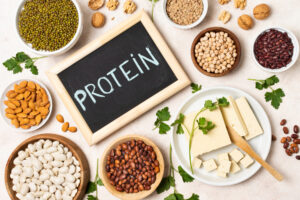
Protein And Brain Function – Proteins are responsible for building and maintaining the structural components of neurons. For example, cytoskeletal proteins like actin and tubulin help give neurons their shape and provide support for their processes, such as axons and dendrites also protein. Proteins act as messengers to relay signals within and between neurons. Receptor proteins on the surface of neurons bind specific neurotransmitters, initiating a series of biochemical reactions that transmit the signal from the cell membrane to the nucleus, influencing gene expression and other cellular processes.
Omega 3 fatty acids – Omega-3 fats, particularly docosahexaenoic acid (DHA), are a major structural component of brain cell membranes. They help maintain the integrity and fluidity of these membranes, allowing for proper communication between brain cells.
Omega-3 fats have anti-inflammatory properties that can help reduce chronic inflammation in the brain. Inflammation is associated with various neurological disorders, including Alzheimer’s disease, Parkinson’s disease, and depression. By reducing inflammation, omega-3 fatty acids may help protect against these conditions and promote overall brain health.

Depression, Immunity And Nutrition – Dietary patterns can affect immune system function and inflammatory responses in the body. For example, a diet high in processed foods, added sugars, and unhealthy fats may promote inflammation and contribute to immune dysregulation. On the other hand, a diet rich in fruits, vegetables, whole grains, lean proteins, and healthy fats has been associated with reduced inflammation and improved immune function.
Conclusion – The food we eat has a direct impact on mental health. A balanced diet that includes nutrient essential for brain function and support healthy gut is vital for promoting positive mental well- being. A poor diet high in processed foods and lacking essential nutrients. Paying attention for dietary choices for maintaining good mental health.